
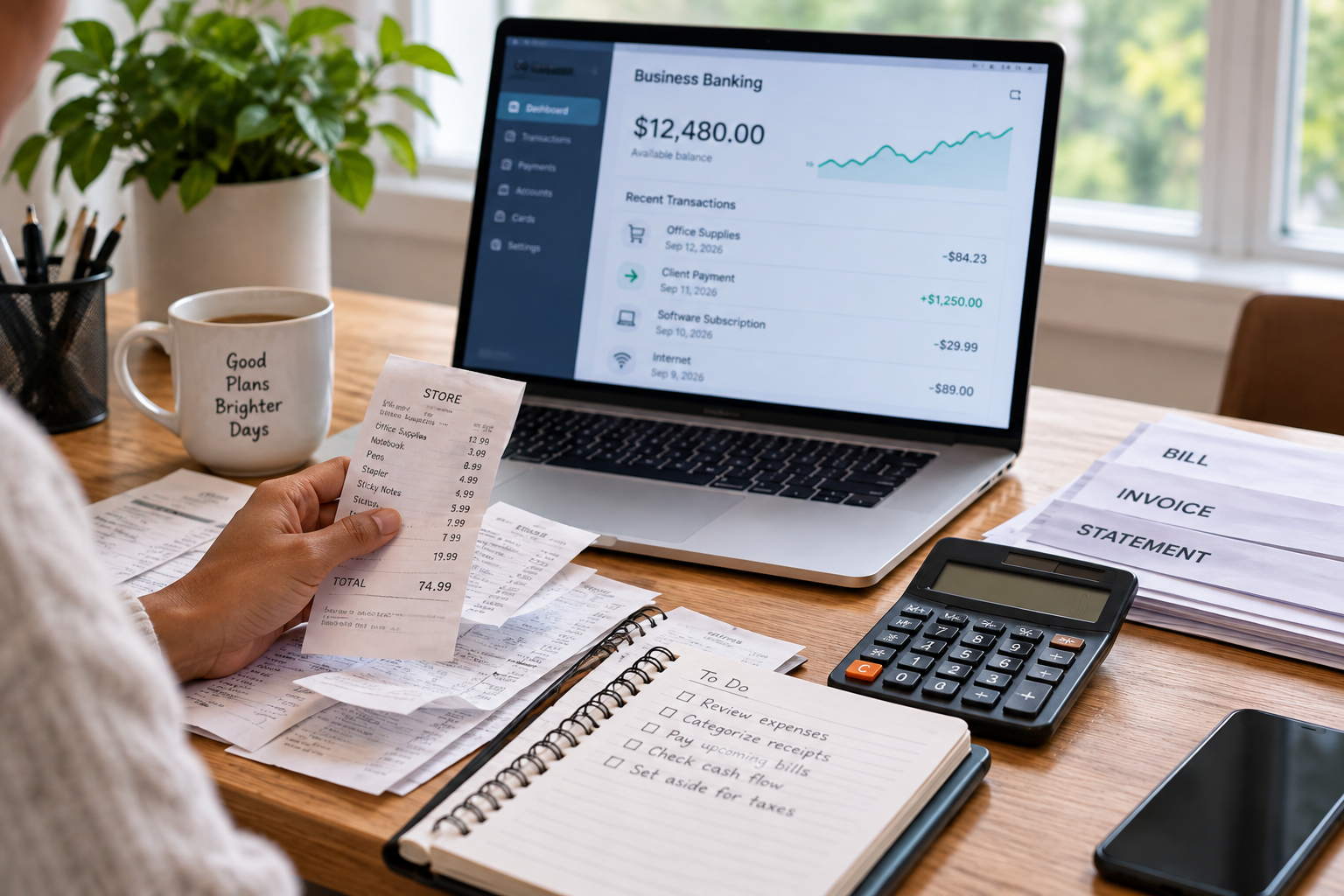
It is easy to open your business banking app, look at the balance and assume you know how your business is doing.
There is $8,000 in the account. Things must be going well.
Or perhaps there is only $1,200 left. Something must be wrong.
But your bank balance is only a snapshot of one moment. It does not tell you what money is already committed, what customers still owe you, what bills are coming next or how much of that balance may eventually need to go toward taxes.
Understanding the difference can help you make better financial decisions.
A healthy bank balance can be misleading
Imagine your business account has $10,000 in it today.
At first glance, that may feel comfortable. But perhaps you also have:
- $3,000 in upcoming contractor payments
- $1,500 in software and operating expenses
- $2,000 that you have set aside for taxes
- $1,200 in bills due next week
Suddenly, that $10,000 looks very different.
The money exists in your account, but not all of it is necessarily available to spend.
Money you have earned may not be in the bank yet
The opposite situation can happen too.
Your bank balance may look unusually low even though your business has had a strong month.
Suppose you completed $12,000 worth of work, but several customers have 30 days to pay their invoices. Until those invoices are paid, that revenue will not appear in your bank account.
This is one reason it is useful to look at your invoices and expected payments alongside your current cash balance.
Upcoming expenses matter
Some business expenses happen predictably every month. Others arrive quarterly or annually.
Insurance renewals, software subscriptions, payroll, contractor payments, taxes and equipment purchases can create significant demands on your cash.
If you only look at today's balance, it is easy to forget about money that will need to leave the account soon.
A better question is not simply:
“How much money do I have today?”
It is:
“After considering what is coming in and what needs to go out, how much money is actually available?”
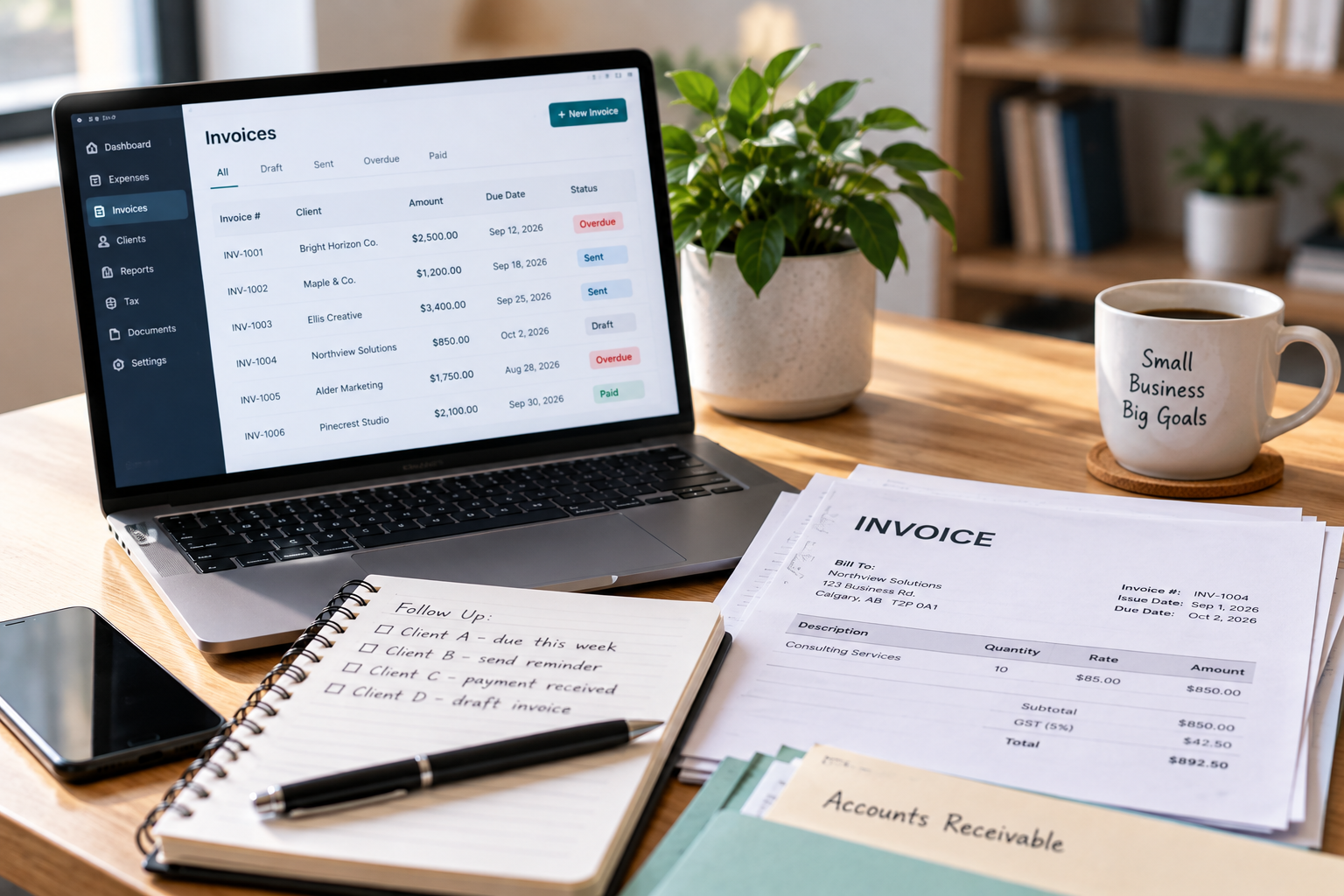
Your unpaid invoices are part of the picture
Outstanding invoices represent money you expect to receive, but timing matters.
An invoice due tomorrow is different from an invoice that has been overdue for 60 days.
Keeping track of who owes you money, how much they owe and when payment is expected can give you a clearer idea of what your cash position may look like in the coming weeks.
Taxes can make your balance look bigger than it really is
Depending on your business and tax obligations, some of the money sitting in your account may eventually need to be remitted or paid to the government.
Treating every dollar in the account as spendable can therefore create an unpleasant surprise later.
Keeping tax obligations visible alongside your everyday business finances can help you distinguish between money that is truly available and money that already has another purpose.
Look forward, not only backward
Financial records tell you what has already happened.
Cash flow planning adds another question:
What is likely to happen next?
That means considering expected customer payments, upcoming bills, recurring expenses and other known financial commitments.
You do not need to predict every dollar perfectly. Even a basic view of the next few weeks can be more useful than relying on today's bank balance alone.
A bank balance tells you where your cash is right now. Good financial organization helps you understand where it needs to go next.
Give every dollar some context
The goal is not to stop checking your bank balance. It is still an important number.
Just avoid treating it as the entire financial story.
When you can see your bank balance alongside expenses, invoices, upcoming obligations and financial records, you have much more context for deciding whether to spend, save, invest or wait.
Organize your expenses, receipts, invoices and financial records in one place with Your Personal CFO.